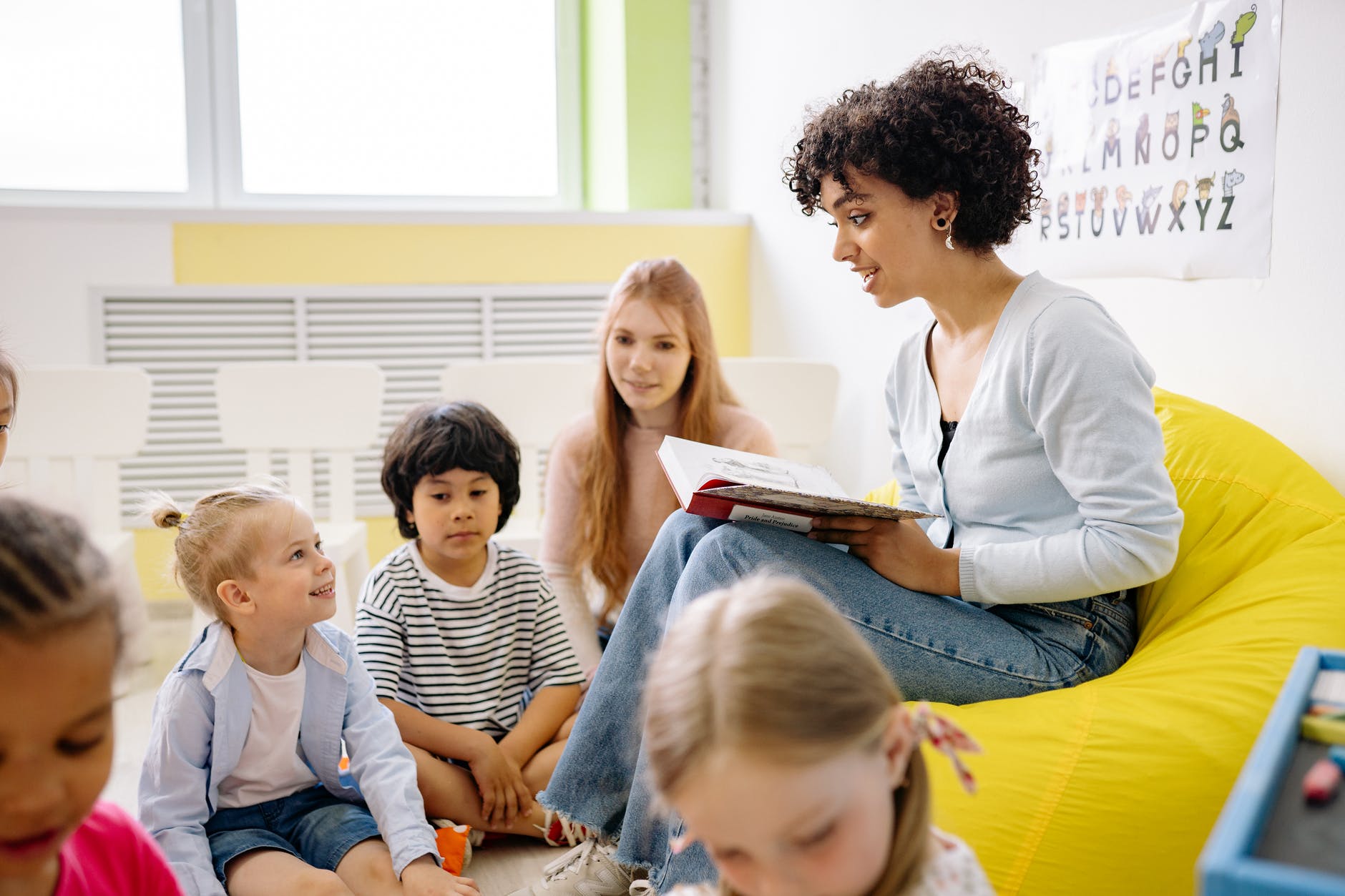
We must ensure that children’s early encounters with reading are pleasurable so they will cheerfully return to the experience, now and forever. Our ultimate goal is to create lifetime readers.
Jim Trelease’s The Read-aloud Handbook Eighth Edition Edited by Cyndi Giorgis (p. vi)
The Read Aloud Handbook uses statistics and stories from the USA to illustrate the importance of reading aloud to children. The book discusses children as young as new born babies as well as other age groups up to adolescents.
Read Aloud Society is a platform created with the mission to apply the lessons of this best selling book to Canada-specific statistics, stories, and situations to develop a portfolio of resources that promote reading aloud to children of all ages across communities of Canada.
As I embark on a journey of developing these resources, many questions shape my hunt for information.
“Fabric of Family Life”
“In our pursuit for higher and higher scores” [said the education columnist]’ “the fabric of family life has just been destroyed”.
The Read-aloud Handbook Seventh Edition by Jim Trelease (p. xvi)
Coming from a South Asian background where education is increasingly becoming a more and more competitive race for status, the term “fabric of family life” was particularly attention grabbing to me. With mobile devices already robbing us of quality social interactions, social media is only helping such races for scores and grades get worst and further damage this fabric of family life.
Video streaming is the most recent addition to family transportation and does nothing but deprive the child of yet another classroom: a conversation with parents or the shared intellectual of listening to an audiobook communally.
Jim Trelease’s The Read-aloud Handbook Eighth Edition Edited by Cyndi Giorgis (Back Cover)
I have never been a fan of a video screen in a vehicle that leaves the front seaters out of the family time. More importantly, in the battle of limiting children’s screen time, it is only ironic to purchase even more expensive vehicles to accomodate more screen time for the children in the back. Even the most simplest vehicles in todays market should have a CD-rom. For parents with the budget for fancier digital features, many carplays have bluetooth or can be synced with Audible or other audio apps.
The communal experience of listening to audiobooks together is a particular area of interest for me. Edmonton Public Libraries offer CD, digital downloadable, and streaming online audiobooks. Wether it is a long drive, outdoor picnic, or a cozy indoor gathering in the freezing winters, audiobooks have a potential to create memorable family times. I look forward to undertaking projects on this topic in the future.
“This book is about more than reading aloud. It’s about time that parents, teachers, and children spend together in in a loving sharing way”.
Jim Trelease’s The Read-aloud Handbook Eighth Edition Edited by Cyndi Giorgis (Back Cover)
Giorgis speaks about the importance of family and school social capital. Family social capital being “the bond between parents and child such as trust, open lines of communication and active engagement child’s academic life,” and school social capital being “the school’s ability to offer a positive environment for learning.” While researcher found both to be important to the academic success of children, the role of the family was found to be more important(p xiv). Amongst my future project interest is the role of family social capital in helping adolescents navigate their physical, psychological, and social transformations.
Early Childhood Literacy
Research suggests that 90% of a child’s brain is developed by age five, before many children have access to formal education.
(Source: First Things First. (2019). “Why Early Childhood Matters: Brain Development.” ) cited by Canadian Children’s Literacy Foundation
A 2017 research by Scholastics Canada (p 54) says 54% of parents of children aged 0 to 5 heard advice to read aloud to their children. Of those who received advice 67% said the source of advice was a parenting magazine, website, blog, or books. 62% credited family and friends. This category includes the child's grandparents, other parents, familiar teachers, and relatives and friends. And only 23% of the advice was attributed the child's paediatrician.
How can healthcare networks, school boards, and other organizations collaborate on increasing the percentage of informed parents and to-be parents?
It’s predicted that children who are read to at least once a day will hear 290,000 more words by age 5 than those who aren’t read to by a parent or caregiver.
(Source: Ohio State University, “When Children Are Not Read to At Home: Million Word Gap”) cited by Canadian Children’s Literacy Foundation
How can educating elementary school parent associations help word of mouth advice spread to parents of younger children?
Supporting an Immigrant Based Society
Reading and speaking skills in the first language help the development of skills in second language.
Edmonton Public Libraries carries books and literature in more than 20 world languages. This include books for children and adults.
A one per cent increase in adult literacy would create an economic benefit of $67 billion gross domestic product for Canada per year
(Source: Deloitte LLP. An Economic Overview of Children’s Literacy in Canada) cited by Canadian Children’s Literacy Foundation
The better we can support immigrants with their literature skills the more we can contribute to a healthier economy.
Children in low socioeconomic communities are almost 2× as likely to be behind in early development skills as high-socioeconomic status peers
(Source: Pan-Canadian Public Health Network) cited by Canadian Children’s Literacy Foundation
Bilingual children’s books make a great opportunity for immigrant families to learn language together. In reading to their children parents can develop their English reading skills while they expose their children to their first languages, cultures, and heritages.
Pandemic disruptions in children’s learning are forecast to cause a 30% increase in socioeconomic skills gaps
(Source: Research Group on Human Capital and Department of Economics, School of Management, Université du Québec à Montréal) cited by Canadian Children’s Literacy Foundation
How can communities collaborate on minimizing the impact of the pandemic on childhood literacy development?
For more resources on reading aloud visit Read Aloud Society.
 Aura Project